The Hellenic History of Beer in a Historic Land
Greece is famous for its ancient culture, and part of that culture is their celebration of wine. In ancient Greece beer was considered to be an uncivilized drink fit for slaves, lower classes and non-Grecians. Wine was the drink of the Greek aristocracy and beer (“zythos”) was consumed by the masses. This was mostly due to the fact that peoples who lived in regions where grapes did not naturally grow—such as the Egyptians, Celts, and Germanic tribes—brewed and consumed beer not wine. These people did not did share the Greek language and culture, so the Grecian elite called them barbaroi (barbarians) and saw them as drinking a crude, uncultivated beverage. Slaves were sometimes paid in beer for their work. In some reports of archeological digs drinking ancient drinking vessels with the remnants of both beer and wine in the same cups were recovered.
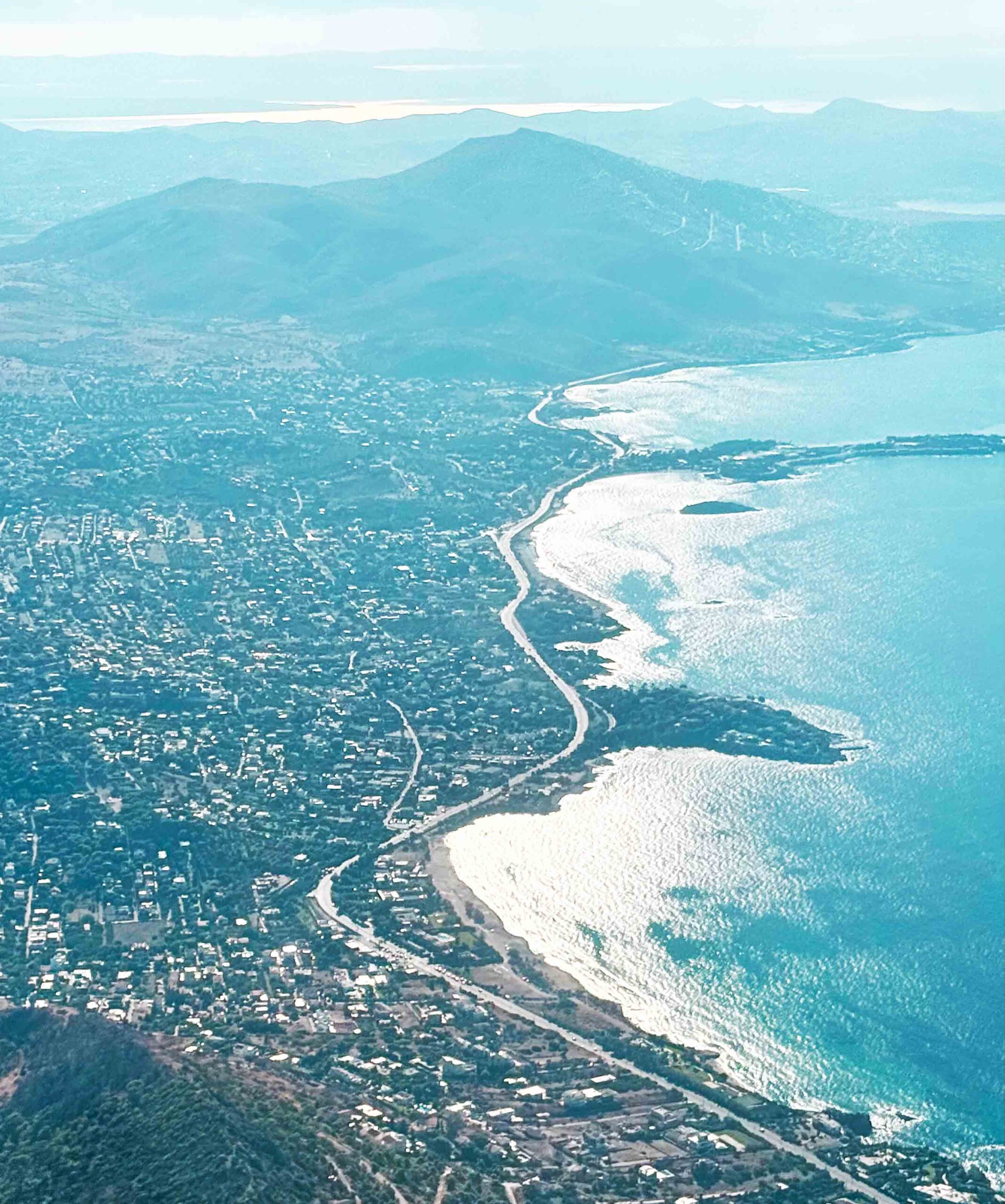
Greece Mainland Shore
For thousands of years there was beer drinking in ancient Greece, but it was not really considered a serious drinking choice in the Greek culture until the early 1800’s. It was in 1833, following the Greek War of Independence, that a 17-year-old Bavarian prince named Otto was selected by the worlds most powerful nations of the time to lead newly independent Greece. Interestingly, it was King Ludwig I, Otto’s father, who started the tradition of Oktoberfest in Bavaria in 1810 as a celebration of his marriage. (Ludwig was certainly a world beer icon of the 1800’s.)
As Otto and his court moved into Greece, small breweries began to appear to support the Bavarian ex-pats and military stationed there. One Bavarian, Charles Johann Fuchs (translated to “Fix” by the Greeks) opened the country’s first commercial brewery in Athens in 1864. “Fix Beer” became the beer of the King and basically was the only brewery in the Greek market for almost a century. The beer was a traditional Bavarian-style pale lager or Helles (from the German word for “bright” or “pale”) and was brewed following the strict German brewing laws. This famous style, which fit well as a refreshment in the warm Greek climate, became synonymous with “beer” for the Greek people until the 1960’s.
It was in the 60’s that international beer companies came to Greece with their brands and Fix eventually went bankrupt. The two main players in the Greek market became the Athenian Brewery (Heineken’s Greek subsidiary) that makes Alfa, Amstel and Heineken and the Olympic Brewery now fully owned by Carlsberg (Mythos, Kaiser and other brands). The old Fix brand was later revived by Carlsberg’s Greek subsidiary Olympic.
Craft beer arrived in Greece in the early 2000’s with about 5 microbreweries, and has now surpassed 75. Most craft beer drinkers in Greece are young (under 35), or tourists longing for a fresh familiar alternative to the Helles style. Even with this growth, craft beer represents less that 10% of the Grecian beer market while in 2025 craft represents a bit over 13% of the much larger US beer market.
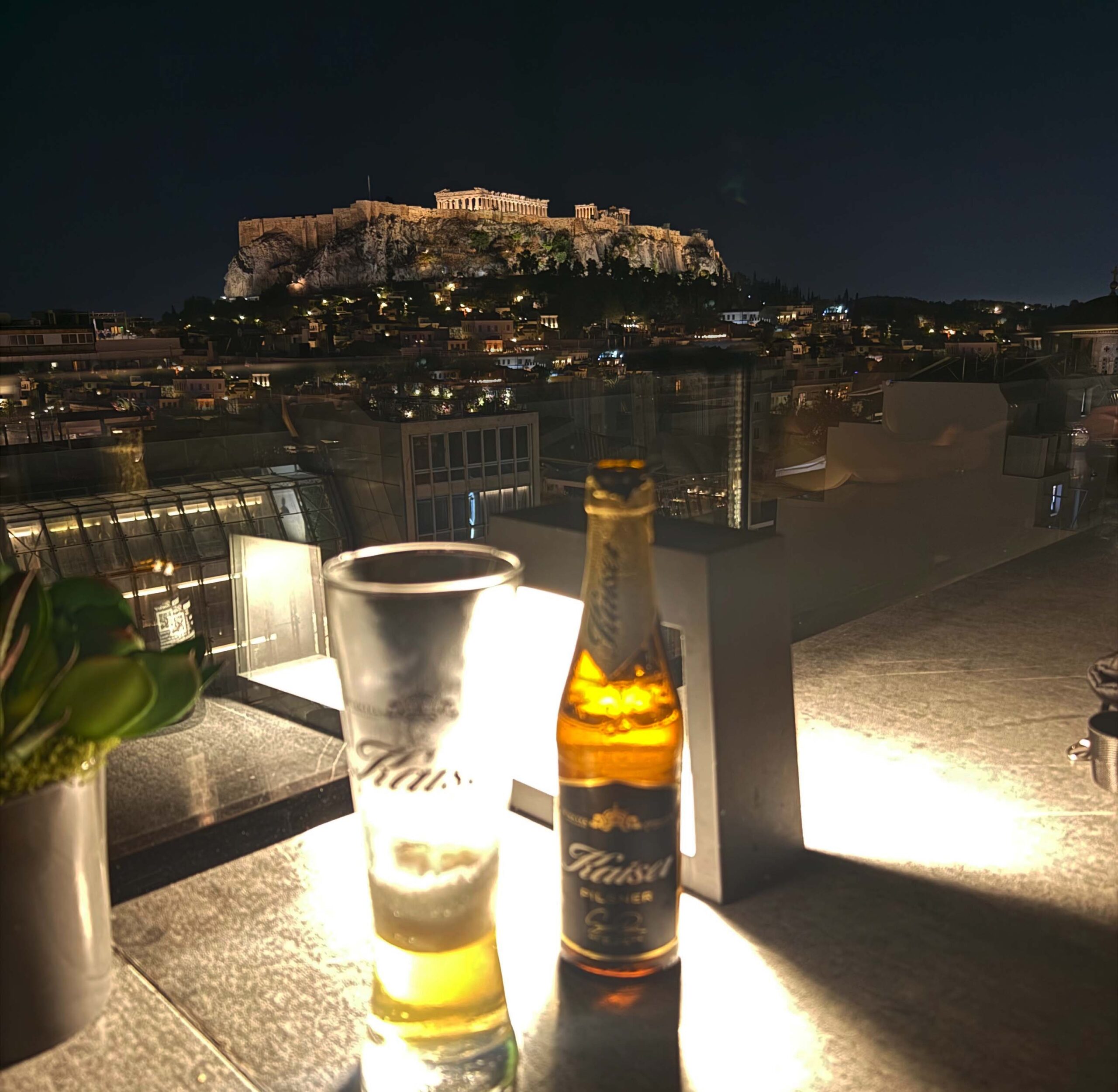
Parthenon over Kaiser Pils
Mainland Beers
When I visited Greece in the fall of 2026, I was happy to find interesting and flavorful beers available throughout my travels in Athens and the Grecian islands (including the Cyclades). I was expecting to find only the traditional Greek pale lagers, and while they were prevalent, so were a number of craft ales and hoppier more inventive alternative beer styles.
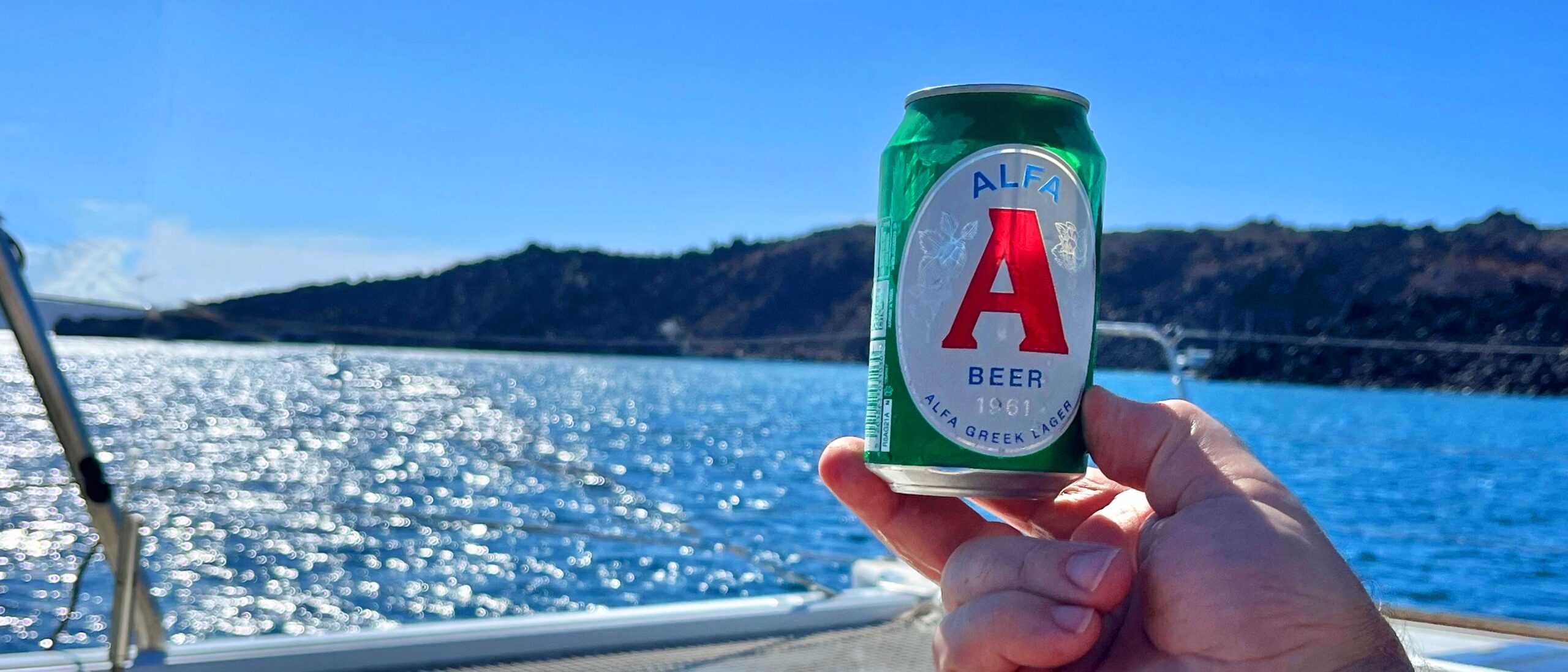
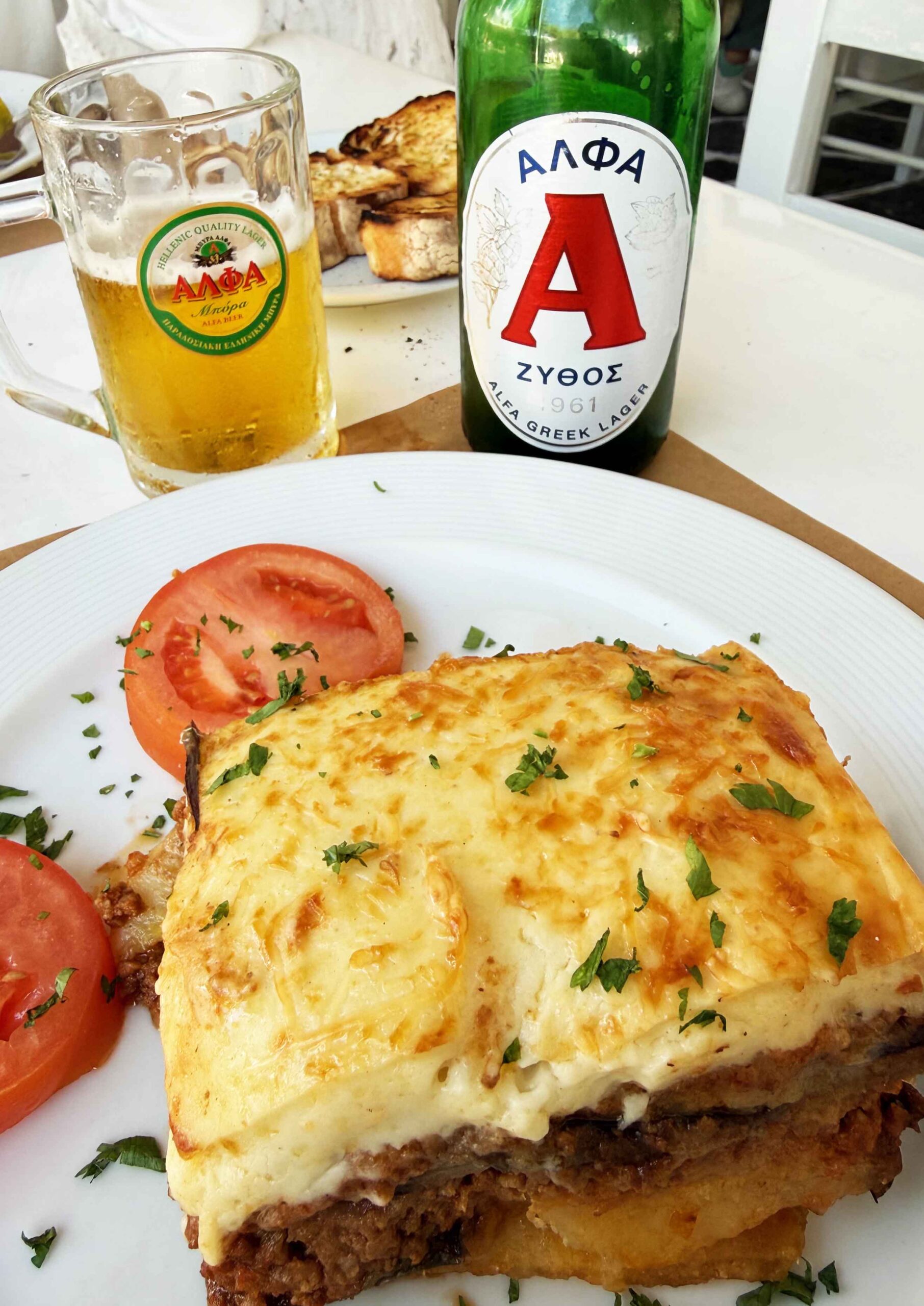
There is no question that the most popular beer style in Greece is still in the traditional German Helles lager. The brands in that style I tried including Vergina, Fix, Mythos, Kaiser and Alfa. All of these beers were clean, clear and lightly flavored. They compliment the robust Mediterranean Greek foods like Souvlaki, Moussaka and Gyros. Summer refreshers they are, and in my brief exposure I admit that I found it hard to tell them apart. Alpha was the lightest, and the Fix and EZA had a bit more body, but, I am sure that the local Grecian beer drinkers can easily tell them apart.
To my taste Mamos from Athenian was significantly different, it is an unfiltered pilsner with a nice balance of breadiness and some noticeable lingering hop bitterness. It is brewed using a recipe from the late 1800s from the original Mamos Brewery. This is a beer that could easily pass for an American craft beer style, and I found it to be a very satisfying beer to drink with and without food. Simply awesome with a freshly made Gyro.
Craft Beer Growth from the Greek Isles
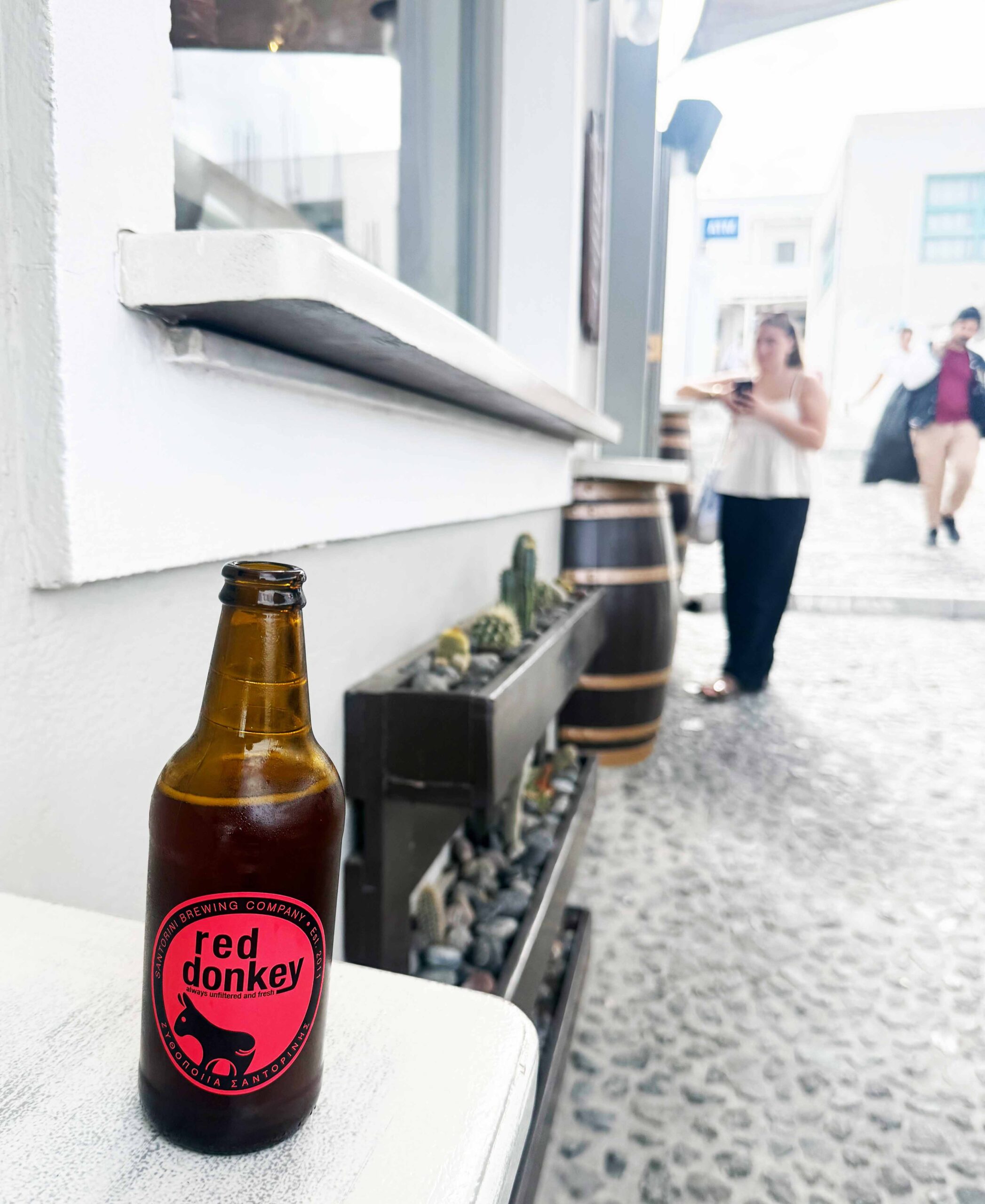
Waiting for a gyro with a Donkey
Since the early 2000’s craft beer has sprung up all over the Agean sea across many of the 56 Grecian islands. One of the most popular tourist sites in all of Greece, the southern isle of Santorini boasts those blue domed churches and white buildings hanging over the cliffs you see in the travel guides, and also has two craft breweries. I visited the Santorini Brewing Company in the Mesa Gonia region, home of the locally famous “Donkey Beers” which opened in 2011. In the popular tourist town of Oia the Yellow and Red Donkey beers are easy to find.
“Yellow” is a 5.2% ABV Pale ale, nicely hopped with four different hops including Aurora and Citra, and the “Red” is a robust amber ale that is a little higher in alcohol, listed as being “Belgian Style”. When I visited their taproom, there were few Greeks in sight. You could easily forget you were even in Greece while sipping hoppy ales and talking about the breweries in States with the other non-Grecian visitors.
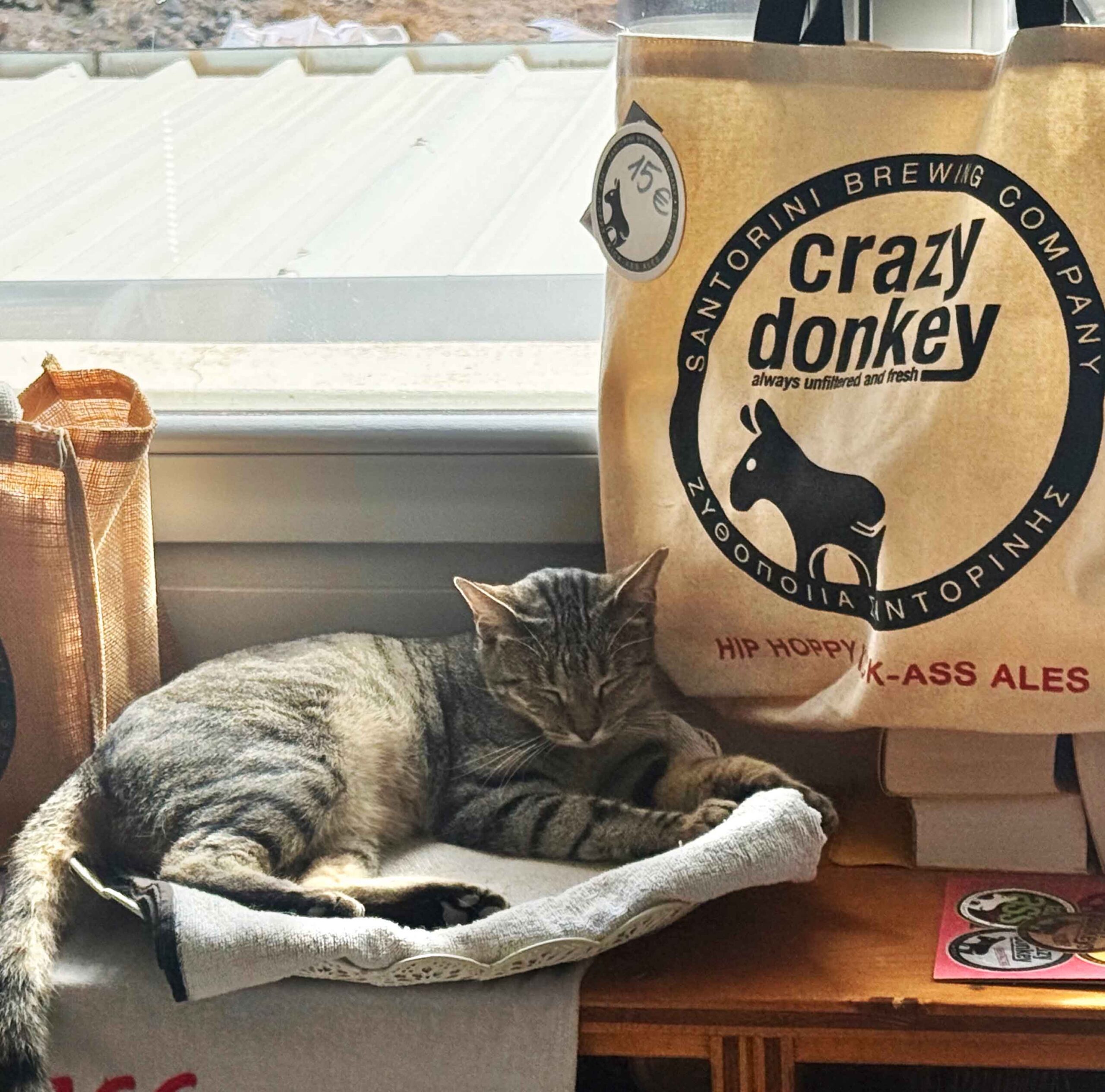
Relaxing in the Santorini Brewery
In addition to Yellow and Red also available in the taproom were “Crazy Donkey” an IPA at around 6% ABV, which claims to be the first IPA produced in Greece, introduced in 2013. The hops give it a real punch, but they do not completely overwhelm the malty body. Also available was “Lazy Ass”, a lager, but one that shares more body and flavor than traditional German style light Greek lagers.
An unexpected treat was to get a taste of the once a year released “Old Donkey” only available at the brewery. It is a flavorful 10% ABV barrel aged bottle conditioned strong ale that sits for 10-14 months either in local Vinsanto wine or raki barrels to mellow. All and all the Santorini Brewing experience was not quite “California Craft” but pretty close for seven thousand miles away.
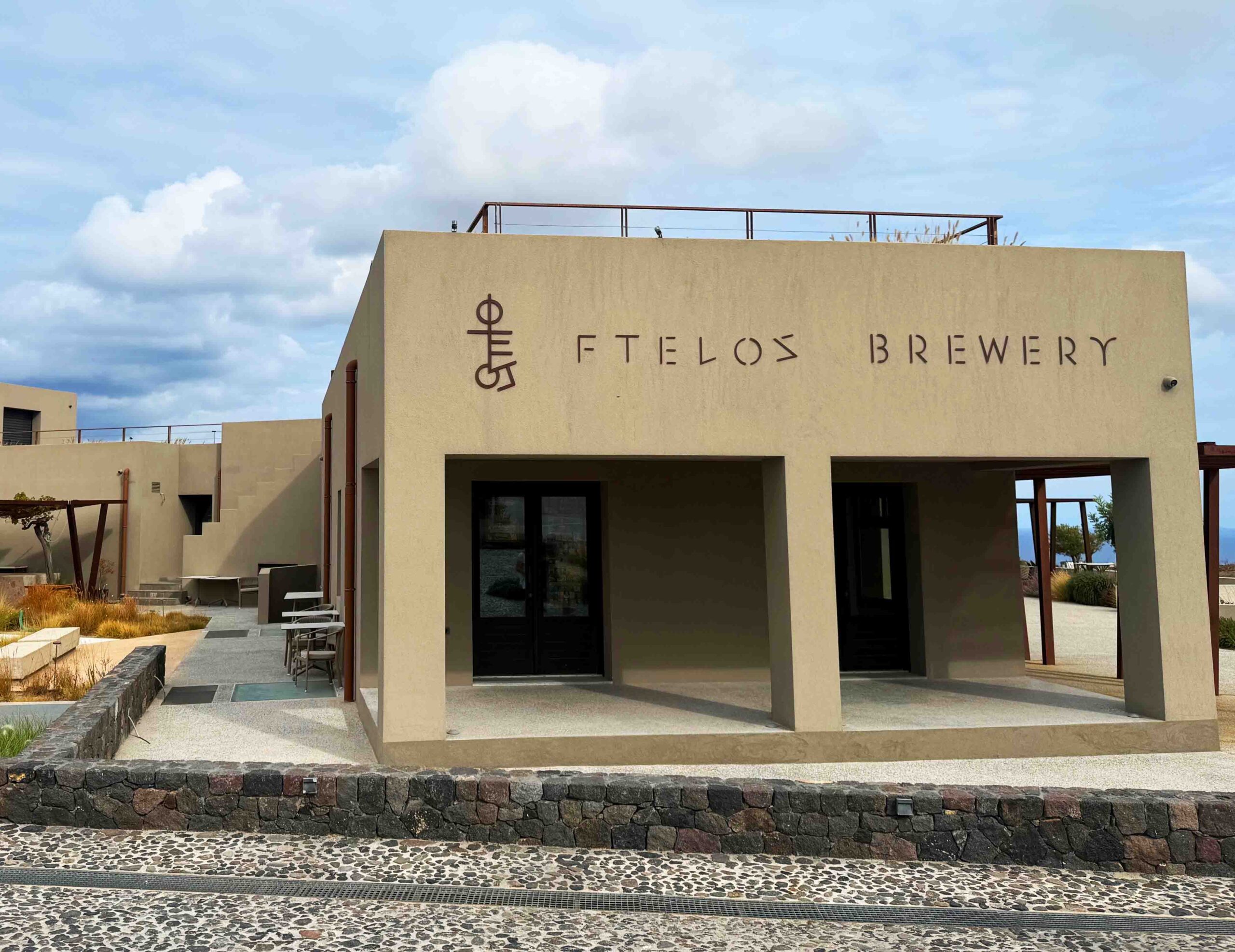
Ftelos’ Beer Palace
The Fltelos Brewery is a newer, larger and more upscale brewery facility established in Karterados Santorini by local businessmen just five years ago. The spacious complex includes restaurants and tapas bars inside, with a view of the large sparkling brewhouse behind panoramic windows.
Their flagship line is called “Blue Monkey” and includes lager, pale ale and Vienna lager styles. In addition to the Monkey’s were some more adventurous brews including “Malt N Marvel” which was a delicious 8% citrusy double IPA heavily dosed with American hops. A unexpected surprise was “Cyrene” a wonderful hybrid brew that is “51% aged lager and 49% local white wine”. This inventive and delicious beer was bottled in 2021 and harkens back to ancient Greek alcoholic drinks that mixed wine and beer ingredients.
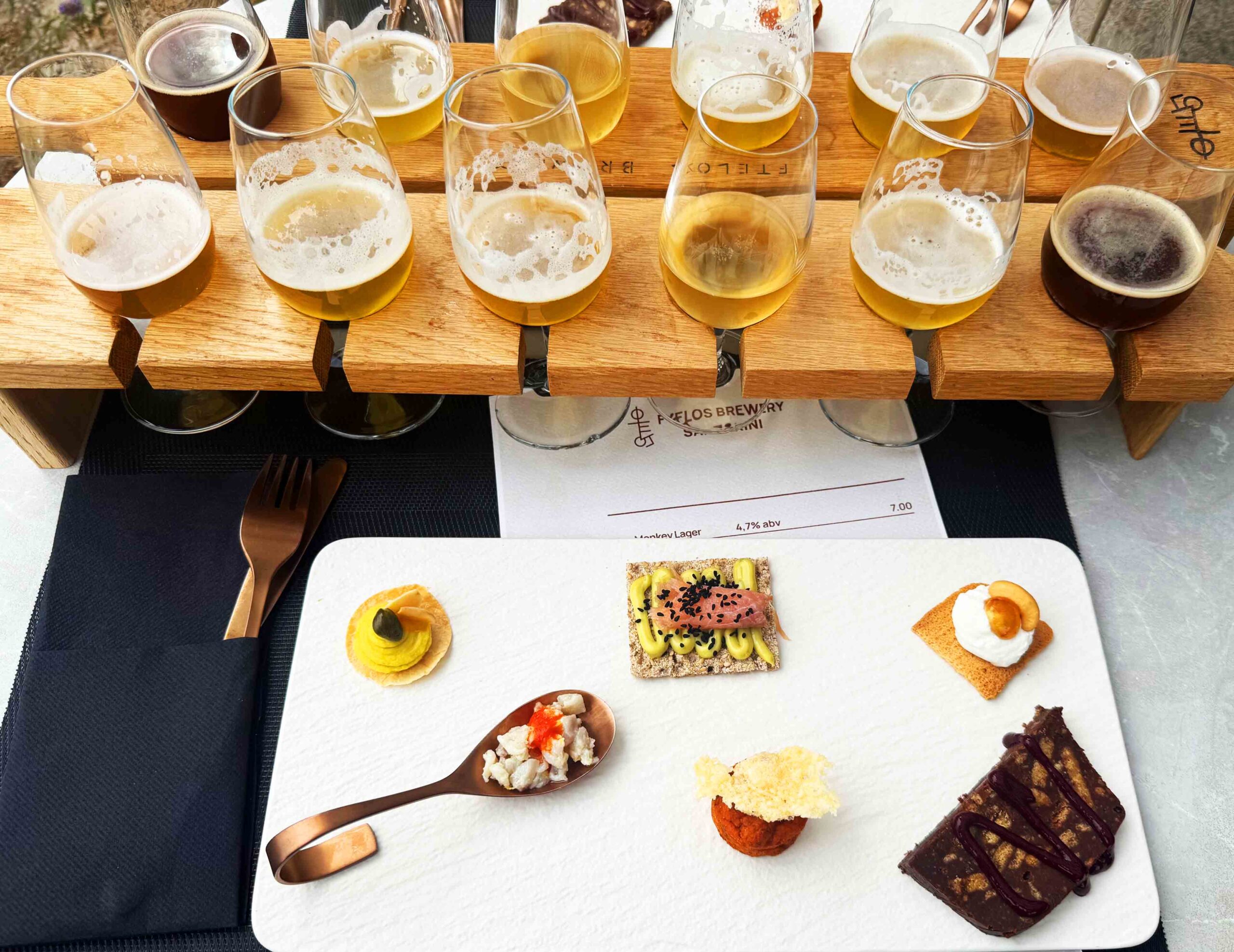
Amazing Beer Pairing with Ftelos
Accompanying these remarkable beers were pairings with some remarkable tapas including a black bean brownie (for a Quadruple) and ceviche for a Gose and some local octopus over a spicy oil for the IPA. We truly drank in the experience while sitting at a table outside the brewery overlooking the local “nest shaped” grape vines. Fltelos is clearly intended as an exceptional gastronomic craft beer attraction and did not disappoint.
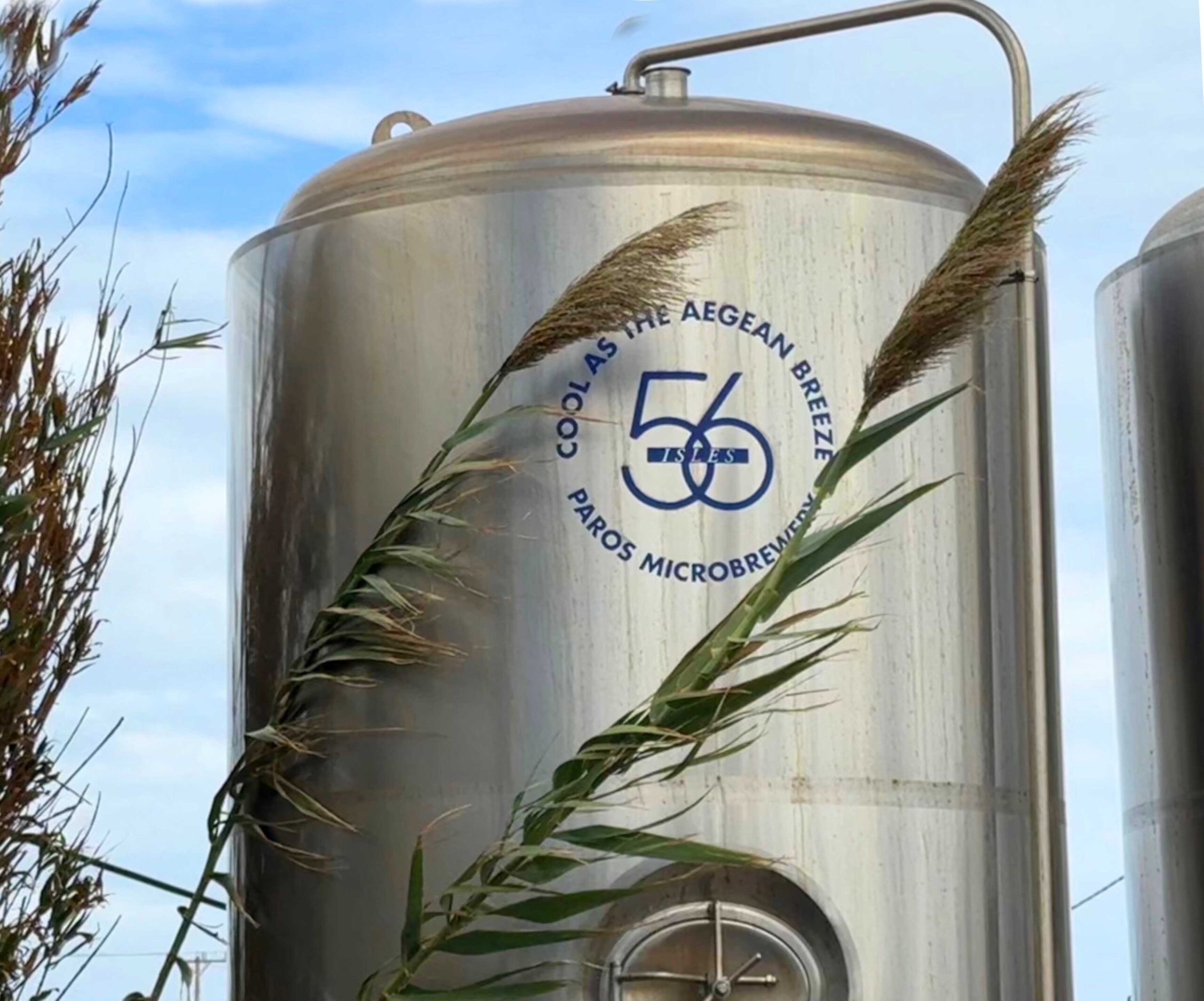
Fresh Aegean Beer at 56 Isles
On the northern island of Paros just outside of the town of Naoussa I visited the 56 Isles Brewery named after the total number Grecian islands. It was founded in 2014 by two local young men who met in London during their studies. Their Pilsner was the first-ever Greek beer to win a star in the Great Taste awards in 2017 according the the Greek City Times. 56 Isles uses Greek barley in their recipes including some grain from the island itself, along with some of the local spices.
The afternoon I visited we were lucky enough to be the only ones visiting the brewery, as the tap room was closing in mid-October. Fortunately, 56’s second shift brewer, Lydia, was happy to pour us some pints of their fine Aegean ales and lagers. She even poured their lager straight from the fermentors – “No point in having to clean out more tap lines just before we close”, she pointed out.
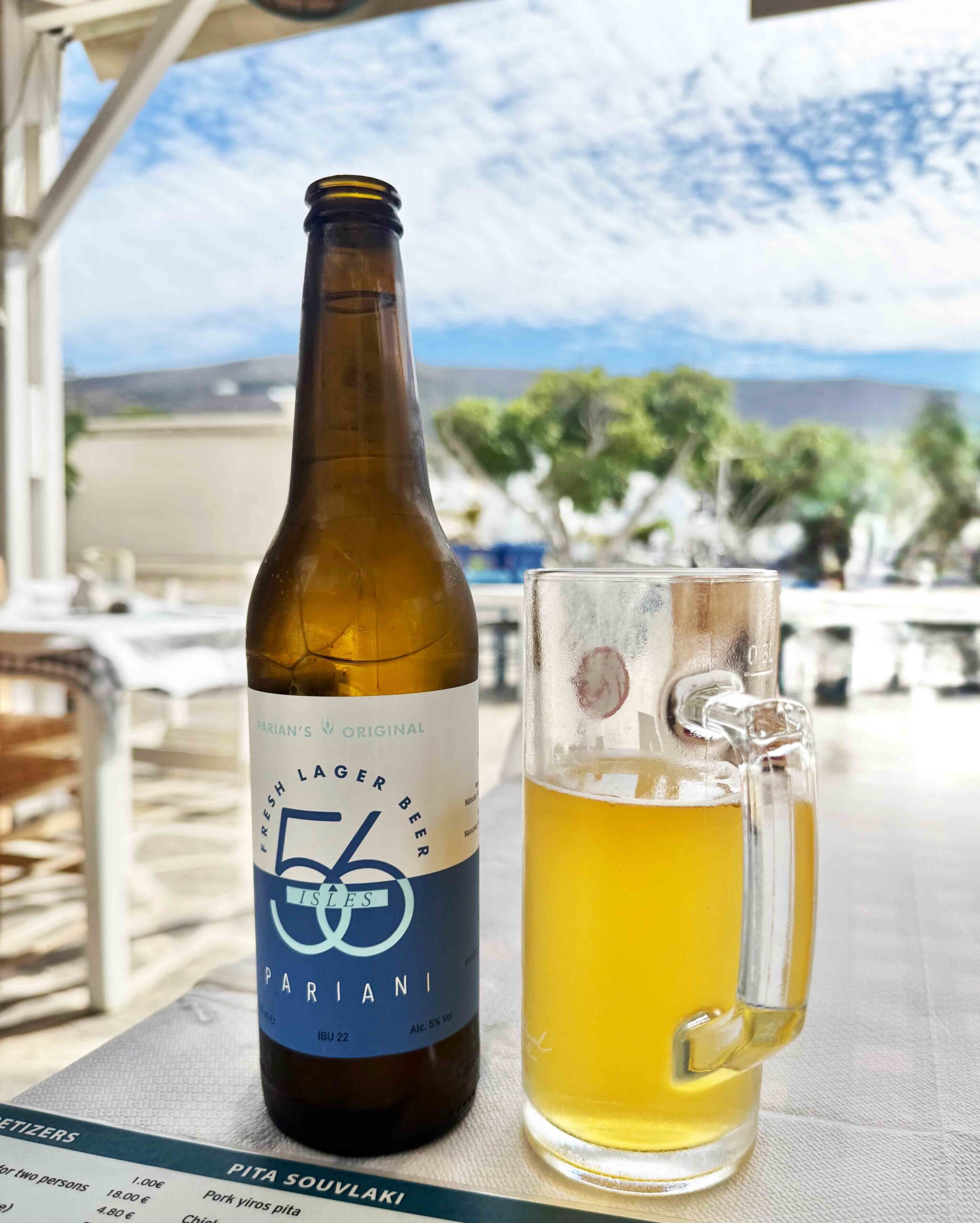
Award Winning Pils
I asked Lydia about what it was like to be in the Greek beer scene and about her interest in it. She said that she felt that the competition in Grecian beer was fierce, as there are now a good number of craft and non-craft brewers on mainland Greece, as well several small island breweries. Many of these tie their names and brands to the local area, creating a sort of “home town favorite” what was hard to compete with (even though she suggested that some are just labeled as local and are actually brewed elsewhere in Greece.)
Greek Beer should not challenge Greek Food
As far as the Grecian dominance of light lagers, she explained “Greek food is so flavorful and robust, beers should not also be so flavorful – it would create a competition, not a compliment to the meal. Wine, while flavorful, is a wholly different taste, and one the locals are very familiar with. We know that most of the locals don’t like the flavor of hops, so it’s not an emphasis of our beers either.” She did say that sometimes they do make one-off’s that they literally give away at the tap room. They recently made a “New England Style IPA” which sold out, but “not to locals” Lydia said with a smile.
Lydia’s involvement with beer took a while to emerge. “I studied wine science in the University, but when I came out of school I had to find a job. I took seasonal work first in Paris, at a hotel and made pretty good money, but eventually I came home. 56 Isles was looking for a second shift brewer so I took that role. In season (April – September) we brew every day, one brewer for the early shift, then me in the second.”
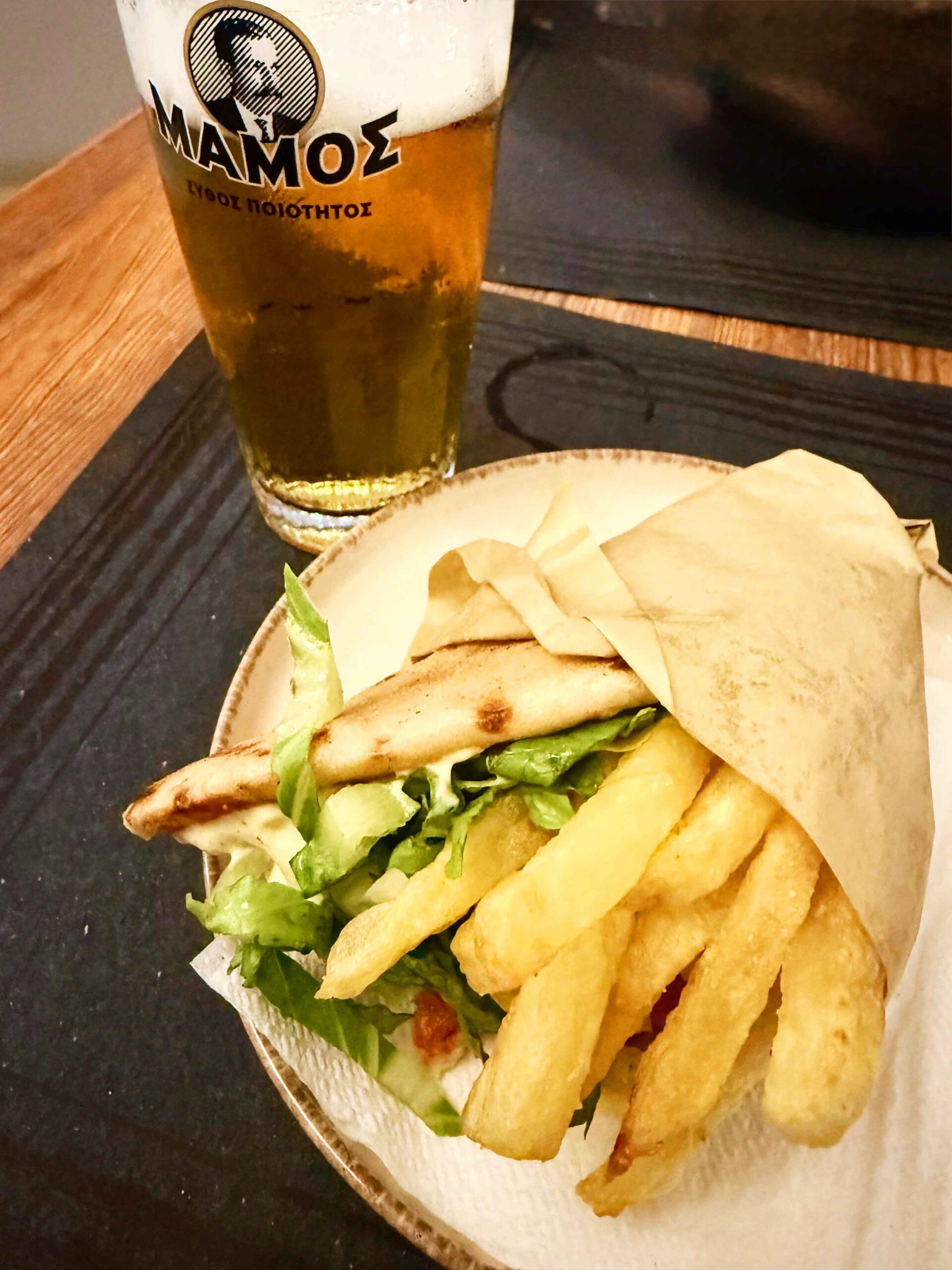
Unfiltered “throwback pils” from Mamos – with a gyro of course!
I asked her if she’d like to run her own brewery some day, and she told me that was not what she wanted, she really just wanted to make beer. I asked Lydia what kind of beer she liked making the best and she said “…those that don’t clog up the lauder tun” (in the brewing process) as they were difficult to work with. “The days when I come into the brewery and they have been brewing in the morning it makes me so happy – I just love the smell of fresh beer brewing”.
In summary, my recent beer experience in Greece well exceeded my expectations. While the beer culture is relatively new to Greece many younger drinkers and visitors alike are now able to enjoy light lagers, delicious craft ales and great wine along with their meals. I am happy to report that beer is no longer just for “barbarians” in Greece. Go to Greece and the Grecian islands, enjoy the weather, the history, the food, the ocean, people and even the beer. You will be happy you did, and I bet you will want to visit again, There is so much to experience in Greece – and so much to learn about, including their growing beer culture.
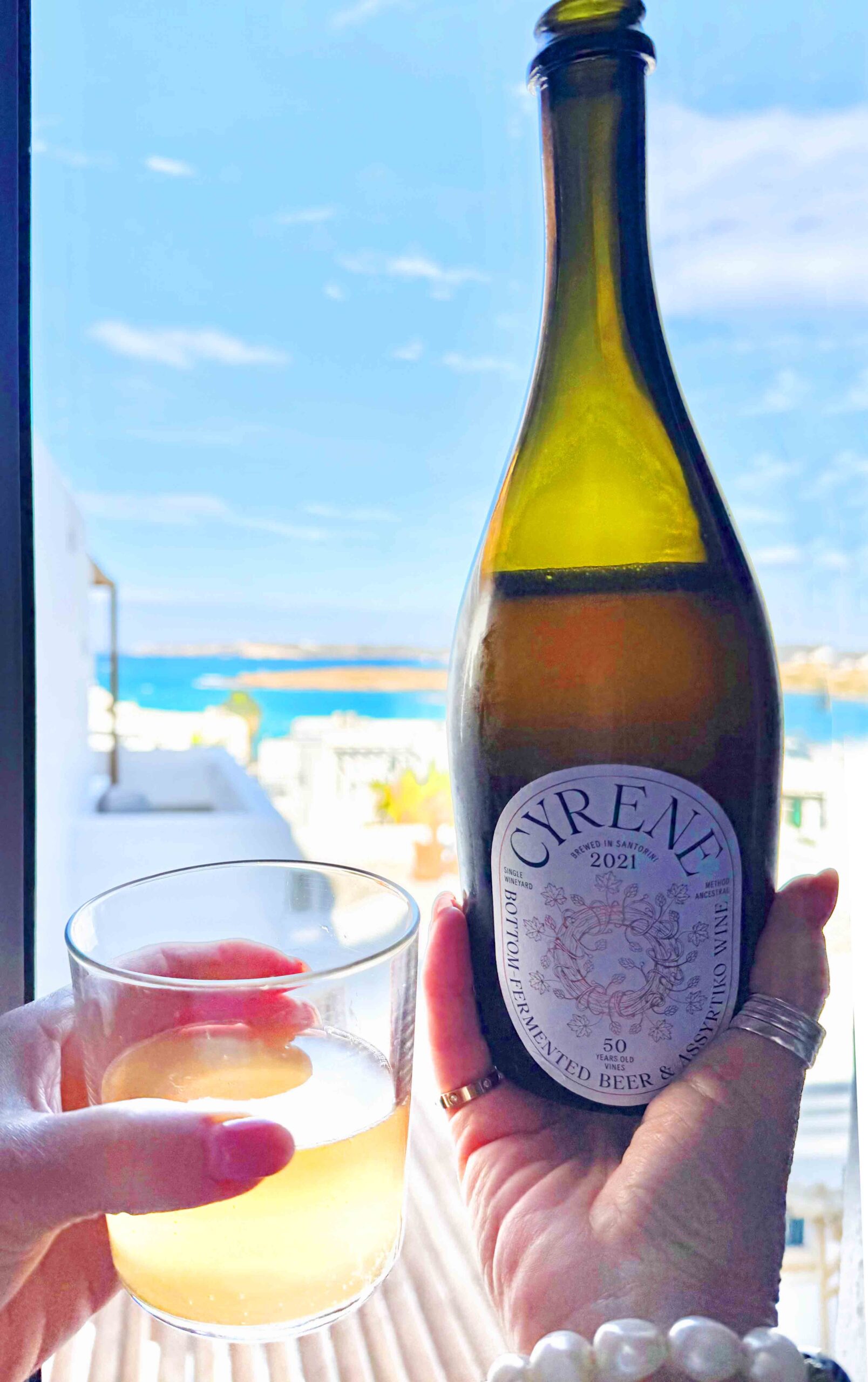
Ancient blend of Grecian Wine and Beer from Ftelos